资料摘要:MMAU
ICLR 2025 的大规模多任务音频理解与推理基准:用 10,000 个多选 AudioQA 样本,把 speech、environmental sound 与 music 放进同一套 27-skill 评测,明确区分“听见了什么、能否提取知识、能否完成推理”,并用噪声替换、caption 级联和人工错误分类检验 LALM 到底有没有在听。
🔒 MMAU 原始论文 PDF
arXiv · ICLR 2025 OpenReview · 官方项目页 · 代码与评测 · 数据集
- 评测对象:不是只测 ASR、audio tagging 或 music genre classification,而是测从 audio perception 到 information extraction、world knowledge 与 deliberate reasoning 的完整链路。
- 规模与范围:10,000 个 AudioQA 多选样本,覆盖 speech、sound、music 三域,27 个任务类型;
test-mini1,000 条,隐藏答案的test9,000 条。 - 论文任务口径:arXiv v1 正文与 Figure 3 对应 11 个 information-extraction task + 16 个 reasoning task;当前项目页写成 12 + 15,属于文档版本漂移,不能静默合并。
- 数据结构:任务类别按 Speech:Music:Sound 为 10:10:7;难度 Easy:Medium:Hard 为 22%:56%:22%;平均音频 10.14 秒。
- 构建方法:13 个公开/既有音频来源加 1,394 条 synthetic audio,经任务筛选、专家标注/过滤、GPT-4 对比选项生成、独立专家复核后形成最终集。
- 论文原始结果:human test-mini 平均 82.23%;Gemini Pro v1.5 为 52.97%,Qwen2-Audio-Instruct 为 52.50%;强 caption + GPT-4o 级联达到 58.74%。
- 关键诊断:把 audio 换成 Gaussian noise 后,MuLLaMa 与 SALMONN 下降很小,说明部分所谓 audio QA 能被 language prior 支撑;Qwen2-Audio-Instruct 与 Gemini 的下降更明显。
- 主要瓶颈:500 个错误样本的人审中,perceptual error 占 Qwen2-Audio-Instruct 的 55%、Gemini Pro v1.5 的 64%;“先听准”比堆更长的推理链更迫切。
- 版本边界:官方仓库在 2025-05-15 将约 25% Q&A 与约 5% audio 修订为
MMAU-v05.15.25。后续 leaderboard 分数不能当作 2024 论文 Table 3 的同口径结果。
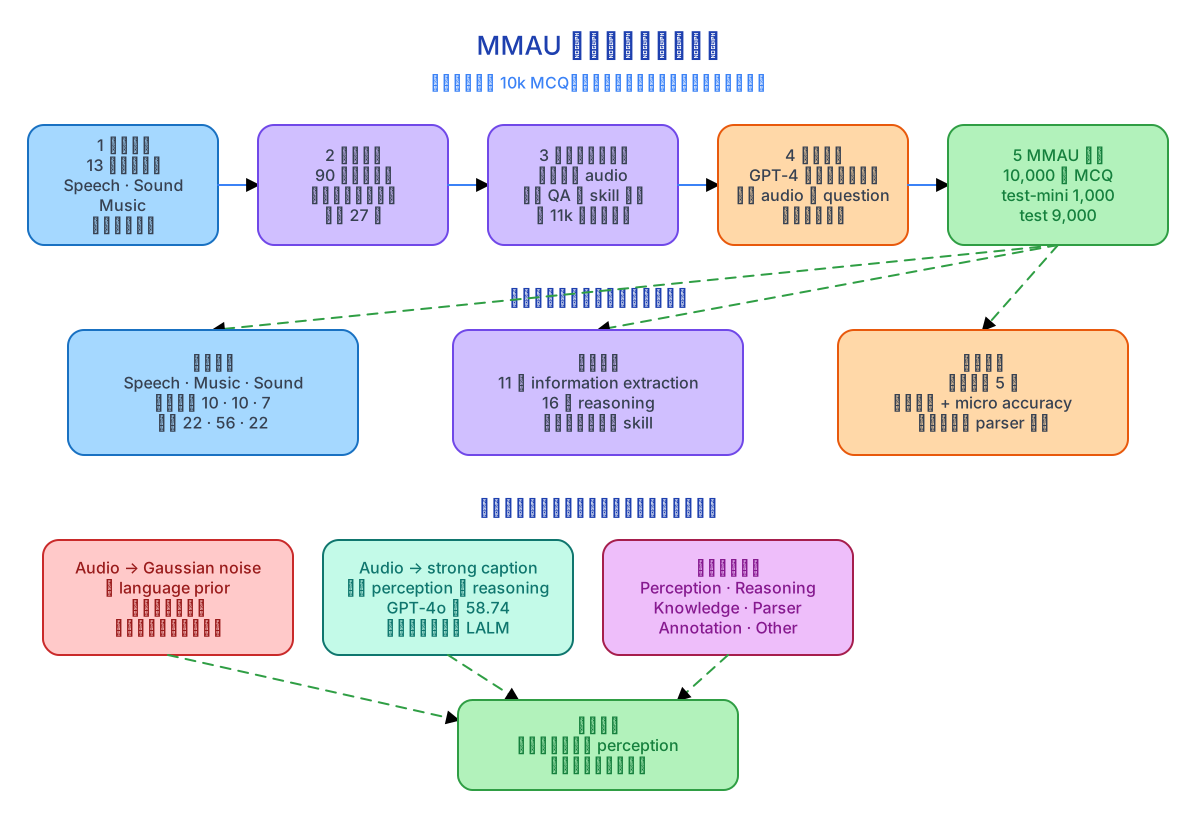
它补的是哪一层评测空白
Section titled “它补的是哪一层评测空白”论文把 LALM 的信息处理拆为三层:
- Audio Understanding / Perception:识别语音内容、声源、音色、节拍、事件顺序等可听证据。
- Knowledge Extraction:从 audio 中抽取事实,并在需要时调用 domain-specific / world knowledge。
- Reasoning:进行时序、因果、角色、讽刺、情绪转折、社会文化或音乐结构推理。
较早的 benchmark 多停留在第一层,或只覆盖某一音频域。MMAU 的贡献不是提出新模型,而是把三域、知识提取与复杂推理放进同一个可比较的 MCQ protocol。
数据与任务统计
Section titled “数据与任务统计”| 维度 | 论文口径 |
|---|---|
| 总样本 | 10,000 |
| 划分 | test-mini 1,000;test 9,000 |
| 三域任务类别 | Speech 10;Music 10;Sound 7 |
| 难度 | Easy 22%;Medium 56%;Hard 22% |
| information extraction | 3,499 条;34.99% |
| reasoning | 6,501 条;应为 65.01% |
| 平均问题长度 | 9.28 words |
| 平均选项长度 | 5.23 words |
| 平均音频长度 | 10.14 sec |
论文 Table 1 把 6,501 条写成 65.74%,但按 10,000 总数计算应为 65.01%。这是排版/算术不一致,不应照抄成二次事实。
27 个技能如何分布
Section titled “27 个技能如何分布”| 类型 | Sound | Speech | Music |
|---|---|---|---|
| Information extraction,11 类 | Eco-Acoustic Knowledge;Sound-Based Event Recognition | Key Highlight Extraction;Conversational Fact Retrieval;Phonemic Stress Pattern Analysis;Event-Based Knowledge Retrieval | Melodic Structure Interpretation;Harmony and Chord Progressions;Musical Texture Interpretation;Instrumentation;Rhythm and Tempo Understanding |
| Reasoning,16 类 | Temporal Event Reasoning;Event-Based Sound Reasoning;Ambient Sound Interpretation;Acoustic-Source Inference;Acoustic Scene Reasoning | Dissonant Emotion Interpretation;Counting;Emotional State Summarisation;Multi-Speaker Role Mapping;Phonological Sequence Decoding;Emotion Flip Detection | Temporal Reasoning;Musical Genre Reasoning;Lyrical Reasoning;Socio-Cultural Interpretation;Emotional Tone Interpretation |
论文将两组 skill 设计为互斥:一个 skill 只属于 information extraction 或 reasoning 之一;但单个问题仍可要求同组内多个 skill。这个设计便于诊断,却也意味着 benchmark 没有系统测试“先抽取再推理”的混合任务,作者把它列为未来工作。
七步构建流程
Section titled “七步构建流程”- Source Selection:从 13 个来源汇集 speech、music、environmental sound,优先 real recording。
- Task Curation:从初始 90 个候选任务筛到 27 个,兼顾 expert-level reasoning、现实价值和可获得音频。
- Expert Annotation:领域专家听完整 audio 后撰写 question-answer,并标 task、difficulty 与 dataset source。
- Expert Filtering:独立专家移除含糊、过难、低质量或答案不可靠的样本。
- Option Augmentation:GPT-4 依 audio/question context 生成 contrastive distractor,不是随机凑选项。
- Expert Review:再次核验答案、选项相关性、任务类型与所需 skill。
- Finalization:从约 11,000 个初始 QA 中先过滤约 800 条、再剔除约 200 条,得到 10,000 条最终集。
| 来源组 | 样本数 | 主要用途 |
|---|---|---|
| AudioSet + AudioSet Strong | 3,179 | environmental sound / temporal event |
| MUStARD + MELD + VoxCeleb1 + IEMOCAP | 2,093 | sarcasm、emotion、speaker、conversation |
| MusicBench + Jamendo + SDD + MusicCaps + GuitarSet + MUSDB18 | 3,334 | music structure、instrument、tempo、lyrics |
| Synthetic | 1,394 | 弥补真实数据难覆盖的任务 |
13 个来源的表内数量相加正好为 10,000;synthetic 占 13.94%,real / pooled audio 占 86.06%。论文没有给出 synthetic audio 的生成模型、生成提示、质量分层和逐任务占比,因此这一部分难以完整复现。
- 指标是 micro-averaged accuracy。
- 对每个模型试多套 prompt,论文报告最佳结果;这会提高可达分数,但削弱固定 protocol 的可复现性。
- 选项顺序随机打乱 5 次,采用出现次数最多的模型选择,降低 positional bias。
- 因 LALM 常输出 open-ended text,作者用正则与字符串匹配映射回选项。
- human baseline 由 8 名大学生在 test-mini 上完成;论文未报告 annotator 间一致性、置信区间或每人覆盖量。
论文 Table 3 的主要结果
Section titled “论文 Table 3 的主要结果”| 系统 | Sound test | Music test | Speech test | Avg test |
|---|---|---|---|---|
| Human,test-mini | 86.31 | 78.22 | 82.17 | 82.23 |
| Gemini Pro v1.5 | 54.46 | 48.56 | 55.90 | 52.97 |
| Qwen2-Audio-Instruct | 45.90 | 53.26 | 45.90 | 52.50 |
| GPT-4o + strong caption | 55.83 | 51.73 | 68.66 | 58.74 |
| Llama-3-Instruct + strong caption | 49.10 | 48.93 | 62.70 | 53.57 |
这里最重要的结论不是 53% 本身,而是:当时最强的 end-to-end LALM 仍与 human baseline 相差约 29 个百分点;更强的 audio caption 加文本 LLM 反而超过端到端 LALM,说明 perception representation 仍是关键瓶颈。
两个诊断实验
Section titled “两个诊断实验”Audio 换成 Gaussian noise
Section titled “Audio 换成 Gaussian noise”| 模型 | 原 audio | noise audio | 变化 |
|---|---|---|---|
| MuLLaMa | 30.66 | 27.70 | -2.96 |
| SALMONN | 32.77 | 29.22 | -3.55 |
| GAMA | 31.81 | 20.70 | -11.11 |
| Qwen2-Audio-Instruct | 52.50 | 32.48 | -20.02 |
| Gemini Pro v1.5 | 52.97 | 37.40 | -15.57 |
noise condition 仍明显高于 25% random baseline,说明题目/选项含有可被 language prior 利用的线索。小幅下降不等于模型完全没听,但足以证明 leaderboard score 不能自动等价为 audio grounding。
Audio 先转 strong caption
Section titled “Audio 先转 strong caption”弱 caption 由 EnCLAP、MuLLaMa、Whisper base 分域生成;strong caption 由 Qwen2-Audio-Instruct 生成。GPT-4o 从 48.65 提升到 58.74,Llama-3-Instruct 从 45.87 提升到 53.57。caption 可以把复杂 audio 压缩为文本证据,但也会隐藏 prosody、overlap、微弱声源和音乐细节,所以它是很强的级联 baseline,不是对 end-to-end listening 的替代定义。
| 错误类型 | Qwen2-Audio-Instruct | Gemini Pro v1.5 | 含义 |
|---|---|---|---|
| Perceptual | 55% | 64% | audio 本身听错或声源/事件误判 |
| Reasoning | 18% | 11% | 证据大致正确,但推理链错误 |
| Answer extraction | 17% | 12% | 语义答案对,格式映射失败 |
| Knowledge | 5% | 3% | 缺 domain-specific knowledge |
| Annotation | 4% | 5% | benchmark answer key / 标注有误 |
| Other | 0.4% | 5% | 拒答或选项均不合适 |
由于 answer-extraction error 占 12%–17%,一部分 leaderboard 差距来自 evaluation interface,而非纯模型能力。当前官方仓库也提示,不同模型输出格式不同,解析器只能尽力标准化。
论文快照与现行版本
Section titled “论文快照与现行版本”- 论文 PDF:arXiv:2410.19168v1,2024-10-24;封面仍写
Pre-print. Under Review,共 33 页。 - 发表状态:后续以 conference paper 发表在 ICLR 2025;保存的 PDF 是 arXiv v1,而不是会后重新排版版。
- 数据修订:官方仓库宣布
MMAU-v05.15.25修订约 25% Q&A 与约 5% audio,并要求后续报告引用该版本。 - 提交方式:2026-01-30 起,完整 test 的评测从 EvalAI 迁至 Hugging Face Space;test-mini 公开 1,000 条,test 公开 9,000 条问题但隐藏答案与解释。
- 分数不可直比:例如 Qwen2.5-Omni 与 Audio Flamingo 3 页面里的 MMAU 分数来自不同论文/benchmark 版本;必须同时记录 split、版本与是否启用 thinking。
- 标题:MMAU: A Massive Multi-Task Audio Understanding and Reasoning Benchmark
- 作者:S Sakshi, Utkarsh Tyagi, Sonal Kumar, Ashish Seth, Ramaneswaran Selvakumar, Oriol Nieto, Ramani Duraiswami, Sreyan Ghosh, Dinesh Manocha
- 机构:University of Maryland, College Park;Adobe
- 发表:ICLR 2025;arXiv:2410.19168v1 提交于 2024-10-24
- 论文:33 页;正文 10 页;Appendix B–L 覆盖额外结果、标注、模型、数据源、skill 例题、失败案例、错误类型与 prompts
- PDF SHA-256:
455dbfa3f7cb020120e3e0d0c624f707324e9596dd3b26b8c82e9b855580d41a - 官方代码 main 快照:
110127f54c0dfba3faa5ec9feee4a7e4148679c5,查询于 2026-08-11
- 贡献成立:三域统一、skill taxonomy、noise ablation、caption baseline 和 error taxonomy 让 MMAU 比单纯榜单更像一套诊断工具。
- “expert-level”证据仍偏弱:难度评分由 domain expert 给出,但 human baseline 仅 8 名大学生、无置信区间;benchmark 难并不自动证明每个任务都达到 expert-level。
- MCQ 有结构性捷径:noise input 仍能取得 28%–37%,说明选项语言与先验可贡献显著分数;更强 distractor 与 audio-conditional counterfactual 仍有必要。
- 数据治理披露不足:synthetic audio 占 13.94%,但生成/筛选细节不足;既有影视语料的版权与 redistributability 也需要依赖官方后续清理机制。
- 版本管理比原论文更重要:2025 修订改变了约四分之一 Q&A。任何模型比较若不写
MMAU-v05.15.25、旧版、test/test-mini 与 inference setting,结论都可能失真。
- 本次识别到的来源问题:用户打开的
mmaubench.github.io页面仍保留 Anonymous、arXiv ID 与 Code 占位符;正式项目页是 sakshi113.github.io/mmau_homepage。 - 讨论结论:整理 benchmark 论文时必须同时记录论文数据版本与现行 leaderboard 版本,否则会把 2024 的 52.97/52.50 与后续 70+ 分模型放在一个假想静态榜单里比较。
- 延伸线索:可进一步摄取 MMAU-Pro,专门比较原 MMAU 的 MCQ/版本捷径如何被后续更难 benchmark 修正。
- 音频理解基准 — 从 perception、grounding、reasoning 到版本控制的评测设计框架
- LALM(大型音频语言模型) — MMAU 的主要被评测对象
- 资料摘要:Qwen2.5-Omni — 后续全模态模型,MMAU 结果需按版本读取
- 资料摘要:Audio Flamingo 3 — 后续开源 LALM,报告 MMAU 与 thinking 结果
- 资料摘要:InstructTTSEval — 相邻的 audio generation / TTS 指令跟随评测,不是理解 benchmark
- LLM-as-a-Judge — 与自动评测相邻;MMAU 主指标本身是 MCQ accuracy
- Wiki 目录